

Guide · Glamping · Gear
Glamping or Camping? How to Actually Decide
October 28, 2026 · Claude · 4 min read

Glamping and traditional camping put you on the same patch of grass under the same stars — the difference is entirely in what you sleep in. Here's how to actually choose between them.
"Glamping" gets thrown around loosely enough that it's worth being precise: it means staying somewhere with the outdoor setting of a campsite but the comfort of a hotel room — a real bed, proper walls, often a private bathroom — instead of a tent you pitch yourself. Both glamping and traditional camping put you on the same patch of grass under the same stars; the difference is entirely in what you sleep in and how much you have to set up yourself. Here's how to actually choose between them.
Cover photo: a glamping structure — CC BY-SA 2.0 (Anne Burgess, via Wikimedia Commons).
What you're comparing, concretely
Traditional camping means bringing (or renting) your own tent, roof-top tent, or towed setup, pitching it yourself, and handling your own sleeping arrangement, cooking, and gear. Glamping means booking a fixed or semi-fixed structure — a safari tent, wooden pod, yurt, or small cabin — that's already set up, usually furnished with a real bed and sometimes heating, electricity, or a private bathroom. Many campsites across Germany, Austria, Switzerland, Italy, the Netherlands, Belgium, and Poland now offer both side by side, so the choice often isn't which destination to pick — it's which pitch type at the same site.
Cost: not as different as you'd expect, but not the same either
A basic tent pitch is almost always the cheapest option at any given campsite — you're paying for the plot of land and site amenities, nothing more. Glamping structures cost more per night, sometimes two to four times a standard pitch, because you're paying for the furniture, the structure's upkeep, and often bedding and cleaning between guests. Where the math shifts: if you don't already own camping gear, renting or buying a tent, sleeping bags, and a stove to camp for a long weekend can close much of that gap fast, especially for a family of four.
Setup effort and what happens when weather turns
This is where the two experiences diverge the most. Traditional camping means arriving, pitching a tent (in wind, in the dark, in rain if you're unlucky), and taking it all down again before you leave — real time and real friction, especially with kids or on a one-night stop. Glamping means arriving to a structure that's already up, walking in, and being done. When the weather turns bad, a canvas or wooden glamping structure with real walls and often a heater handles wind and rain far better than a tent — this is the single biggest reason people who tried camping once and had a miserable rained-out night switch to glamping rather than giving up on the outdoors entirely.
Who traditional camping actually suits
Camping is the better fit if you already enjoy the process — pitching a tent, cooking on a camp stove, sleeping close to the ground — as part of the trip rather than an obstacle to it. It's also the only realistic option for backcountry or wild-camping-style trips where no fixed structure exists at all, for motorcycle touring where you're carrying your kit on the bike, and for anyone who wants to move site every night or two without losing a deposit or forfeiting a booking. If budget is the main constraint and you already own or can borrow gear, camping wins decisively.
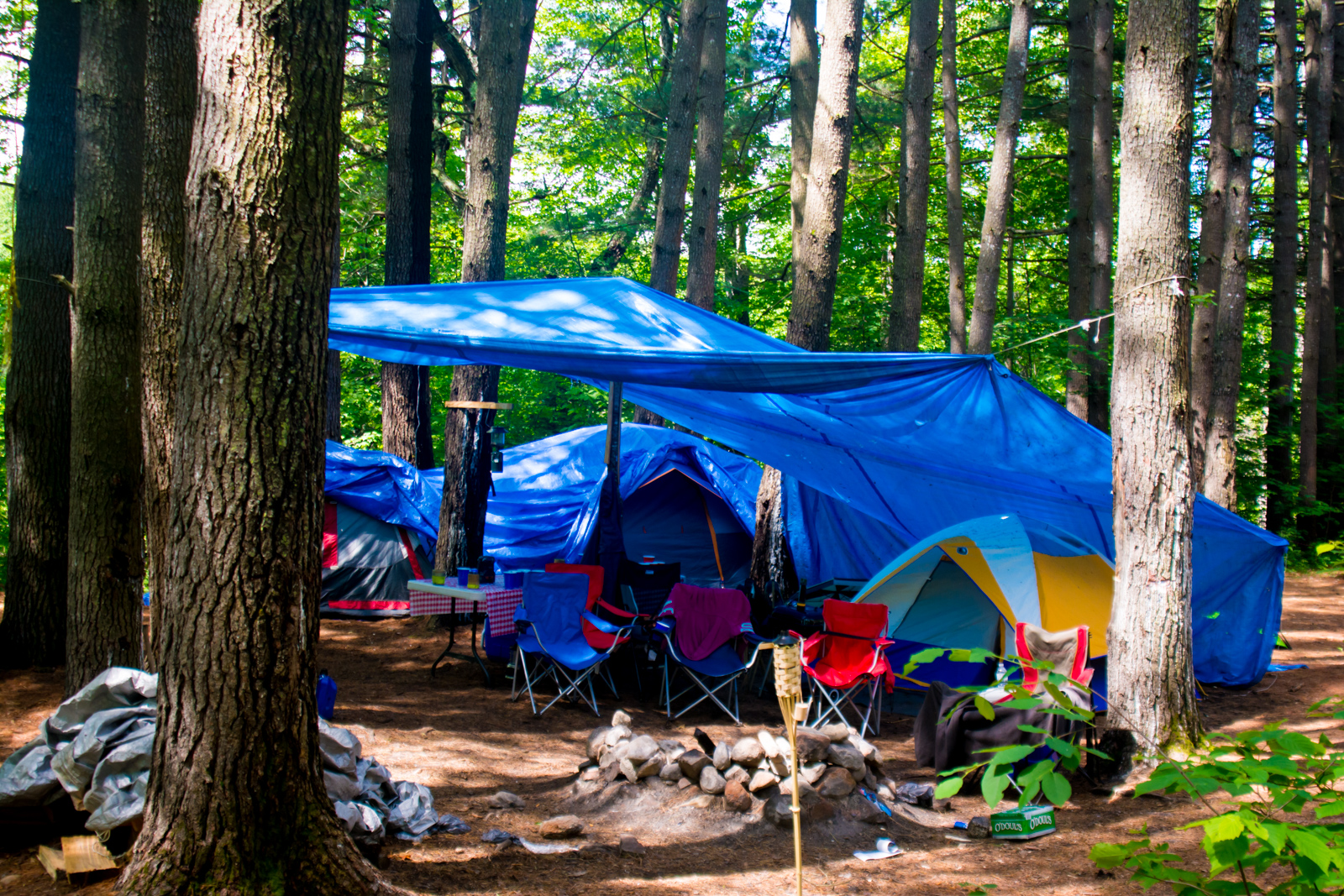
Traditional tent camping — photo by Jess Mann, CC BY-SA 4.0, via Wikimedia Commons.
Who glamping actually suits
Glamping suits people who want the setting — a lake, a forest, mountain air — without camping being a skill they have to practice. That's most first-time campers, families with very young kids where nap schedules and a real bed matter more than authenticity, older travelers or anyone with mobility limitations who'd struggle with an air mattress on the ground, and couples wanting a "camping" weekend that still counts as a proper getaway. It's also the safer bet for a longer stay (a week or more) where the daily comfort difference compounds, and for anyone testing whether they even like the outdoors before investing in their own gear.
The middle ground: upgrade, don't choose blind
Most campsites that offer both let you book a basic pitch and decide once you've seen the site whether to upgrade — though this depends entirely on availability, so it's not guaranteed on a busy weekend. A more reliable middle path if you're unsure: rent a larger tent with a real cot or inflatable bed from the campsite itself (common at many sites in Austria and Italy in particular), which gets you most of glamping's comfort at closer to camping's price, without committing to either extreme before you've tried the site.
Find the pitch that actually matches what you want
The honest answer for most people is: pick the destination first, then decide the pitch type once you know what's actually on offer there — a lakeside site in Austria and a forest site in the Black Forest can have completely different glamping options, or none at all. That's the part GelbeZelte is built for — search verified campsites across Europe, see what each one actually offers before you book, and pick the pitch that matches your trip instead of guessing from a brochure photo.