

Guide · Roof-Top Tent · Gear
Roof-Top Tent or Ground Tent? How to Actually Choose
November 11, 2026 · Claude · 4 min read
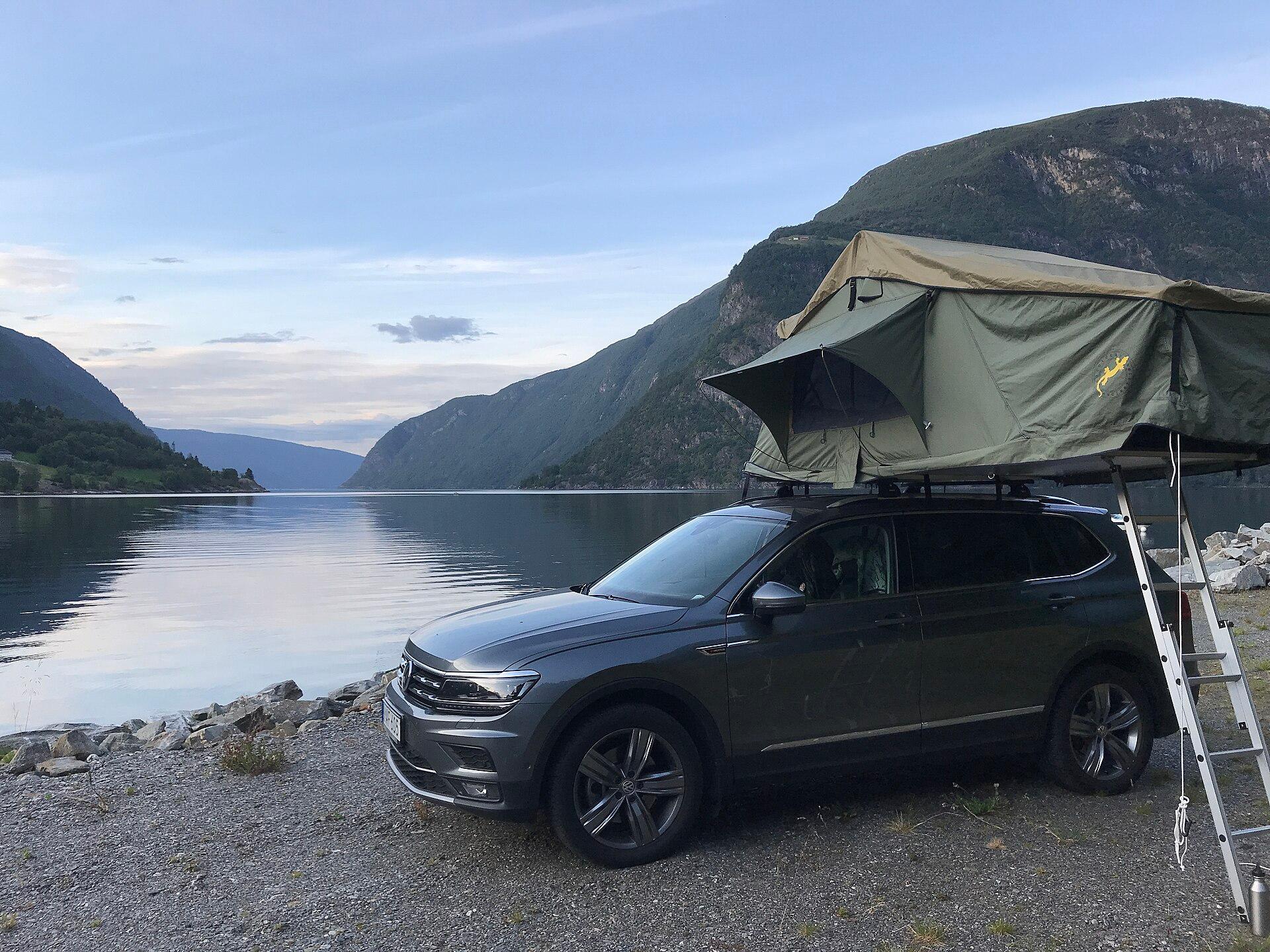
Roof-top tents went from niche overlanding gear to a mainstream purchase in a few years, but it's not a strict upgrade over a ground tent — it's a different set of trade-offs. Here's how to actually choose.
Roof-top tents have gone from a niche overlanding accessory to a mainstream camping purchase in the last few years, and the pitch is seductive: no ground to find, no tent poles, up in minutes. But it's not a strict upgrade over a ground tent — it's a different set of trade-offs that suits a different kind of trip. Here's how to actually decide between the two.
Cover photo: a roof-top tent — CC BY-SA 4.0 (ElisabethStandár, via Wikimedia Commons).
What you're comparing, concretely
A ground tent pitches directly on the ground, packs down small and light, and is completely independent of your vehicle — you can carry it on a motorcycle, in a backpack, or just in the boot of any car. A roof-top tent mounts permanently (or semi-permanently) on a roof rack, folds out into a raised sleeping platform above the vehicle, usually with a built-in mattress, and stays attached between trips rather than being packed away each time.
Setup speed: the roof-top tent's best argument
This is where roof-top tents genuinely win. Most fold out in under two minutes — unclip, unfold, extend the ladder, done — versus 10 to 20 minutes for a decent ground tent, more if it's raining or dark or you're doing it for the first time. If you're doing a road trip with a new site every night, that time adds up fast, and arriving late to a spot with a roof-top tent means you're eating dinner ten minutes later, not fumbling with poles by headlamp.
Comfort and sleep quality
A roof-top tent puts you on a real foam or memory-foam mattress, off the ground, away from roots, stones, and puddles, and usually better insulated against cold rising from the ground. A ground tent's comfort depends entirely on what sleeping pad you bring — a good one closes most of the gap, a cheap one doesn't. Being raised also means better airflow and, for many people, feeling safer from crawling insects and small wildlife, though neither tent type does anything meaningful against larger animals.
What you give up with a roof-top tent
The trade-offs are real. First, your vehicle becomes the tent: you can't drive anywhere once it's set up without packing it away first, which kills spontaneous day trips from a base camp — something a ground tent never restricts. Second, weight and fuel economy take a real hit; a roof-top tent plus rack typically adds 40-70kg permanently to your roof, which matters on mountain passes and at the pump. Third, cost: a decent roof-top tent runs several times the price of a good ground tent, often €1,200-€3,000 versus €150-€500. Fourth, one tent means one group — you can't easily split a roof-top-tent group across two shelters the way you can pitch two ground tents.
Where each one clearly wins
Ground tents win for backcountry and wild-camping-style trips where you're not driving to the spot at all, for motorcycle touring, for groups who want separate sleeping arrangements, for anyone on a tighter budget, and for infrequent campers who don't want a permanent roof modification. Roof-top tents win for road trips with a new site most nights, for uneven or rocky terrain where a flat ground pitch is hard to find, for couples or solo travelers who don't need day-trip flexibility once parked, and for anyone who values setup speed enough to pay for it.
The middle ground: soft-shell vs hard-shell, and trailer tents
If you like the roof-top tent idea but not the permanent roof commitment, a small camping trailer with its own roof-top tent decouples the tent from your daily-driver vehicle — you unhitch the trailer at camp and drive off free. Within roof-top tents themselves, soft-shell models are cheaper and pack flatter but take a bit longer to set up and add more wind drag; hard-shell models set up in under a minute and add less drag but cost more and weigh more.
Match the tent to the trip, not the trend
Neither option is objectively better — a roof-top tent bought for base-camp road trips through the Alps and a ground tent bought for wild camping in the Dolomites are both the right choice for their trip, and the wrong choice for the other's. Once you know what kind of trip you're actually planning, the harder part is usually finding a legitimate site to pitch or park at in the first place — that's what GelbeZelte is for: search verified campsites across Europe and see what each one actually allows before you commit to either setup.